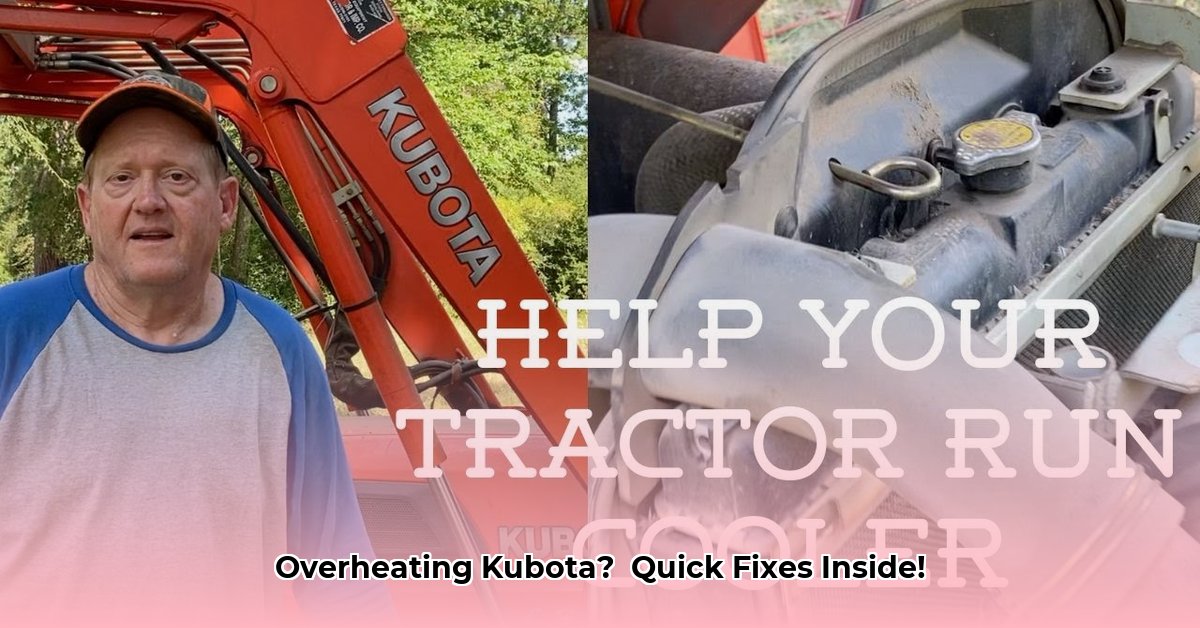
Kubota Tractor Overheating: Troubleshooting and Repair
Kubota tractor overheating is a serious issue that can lead to costly engine damage. This instructional guide provides a step-by-step approach to diagnosing and resolving common causes of overheating, empowering you to get your tractor back to work quickly and safely. Remember: Always allow the engine to cool completely before performing any maintenance or repair. For help accessing the engine, see our guide.
Key Takeaways:
- Regularly cleaning the radiator prevents overheating caused by debris buildup. A clogged radiator severely restricts airflow, leading to heat buildup.
- Worn or damaged V-belts reduce the effectiveness of the cooling fan, causing the engine to overheat. Regularly inspect and replace as needed.
- Preventative maintenance, including regular coolant flushes and inspections, extends the life of your Kubota and avoids costly repairs.
Decoding the Overheating Mystery: A Step-by-Step Diagnostic Guide
Visual Inspection: Carefully examine the radiator for debris (leaves, dust, mud), leaks, or damage. Inspect all hoses and clamps for cracks or looseness. A visual inspection can often pinpoint obvious issues.
Coolant Level and Condition: Check the coolant reservoir. Is the level low? Is the coolant clean or murky, rusty, or contaminated? Murky coolant indicates internal corrosion and needs immediate attention.
Belt Tension and Condition: Inspect the fan belts for wear, cracks, or fraying. Check belt tension; a loose belt will slip, reducing the cooling fan's effectiveness. A slipping belt is a significant overheating culprit.
Water Pump Inspection: Examine the water pump for leaks or damage. A faulty water pump is unable to circulate coolant efficiently, resulting in overheating.
Pressure Test: Use a cooling system pressure tester to detect leaks not visible during a visual inspection. This test is crucial for identifying small cracks or pinhole leaks in hoses, the radiator, or the engine block.
Temperature Gauge Observation: Monitor the temperature gauge under various loads (idle, PTO engaged, heavy load). Does the temperature rise only under heavy load, or is it consistently high even at idle? This helps pinpoint the cause. Consistent high temperatures even at idle point to severe problems.
Fixing the Problem: Hands-on Repair Strategies
Radiator Cleaning: Thoroughly clean the radiator, both internally and externally. Use a garden hose and brush for exterior cleaning. For internal cleaning, use a radiator flush kit following the manufacturer's instructions. Thorough cleaning can often restore cooling efficiency.
V-Belt Replacement: Replace worn or damaged V-belts. Ensure proper tension after installation. Correct belt tension is crucial for effective cooling fan operation.
Water Pump Repair or Replacement: Repair minor leaks on the water pump if possible; otherwise, replacement is usually necessary. A new water pump ensures optimal coolant circulation.
Head Gasket and Cylinder Head Issues: Head gasket failure or a cracked cylinder head are serious problems requiring professional repair. Attempting DIY repair on these components risks significant engine damage.
Preventative Maintenance: Proactive Measures
| Maintenance Task | Frequency | Importance |
|---|---|---|
| Radiator Cleaning | Every 50 hours of operation, more frequently in dusty conditions | Prevents debris buildup, improving airflow and preventing overheating. |
| Coolant Flush | Annually or every 2 years | Removes contaminants, maintaining cooling system efficiency. |
| Fan Belt Inspection | Monthly | Prevents belt slippage and failure, ensuring proper cooling fan function. |
| Coolant Level Check | Before each use | Prevents low coolant levels, a primary cause of overheating. |
When to Call a Professional
Seek professional assistance if:
- You suspect head gasket or cylinder head damage (white exhaust smoke, milky oil, low compression). These repairs require specialized tools and expertise.
- You are uncomfortable performing any of the above repairs yourself. Safety and avoiding further damage are paramount.
- Overheating persists despite your repair attempts. An experienced mechanic can diagnose more complex issues.
Safety Precautions: Prioritizing Safety
- Allow the engine to cool completely: Hot components can cause serious burns.
- Wear appropriate safety gear: Gloves, eye protection, and closed-toe shoes are essential.
- Handle coolant carefully: Coolant is toxic; avoid skin contact and ensure good ventilation.
By following these steps and prioritizing preventative maintenance, you can significantly reduce the risk of Kubota tractor overheating and ensure your equipment operates efficiently and reliably. Remember, early detection and proper maintenance are key to preventing costly repairs.